
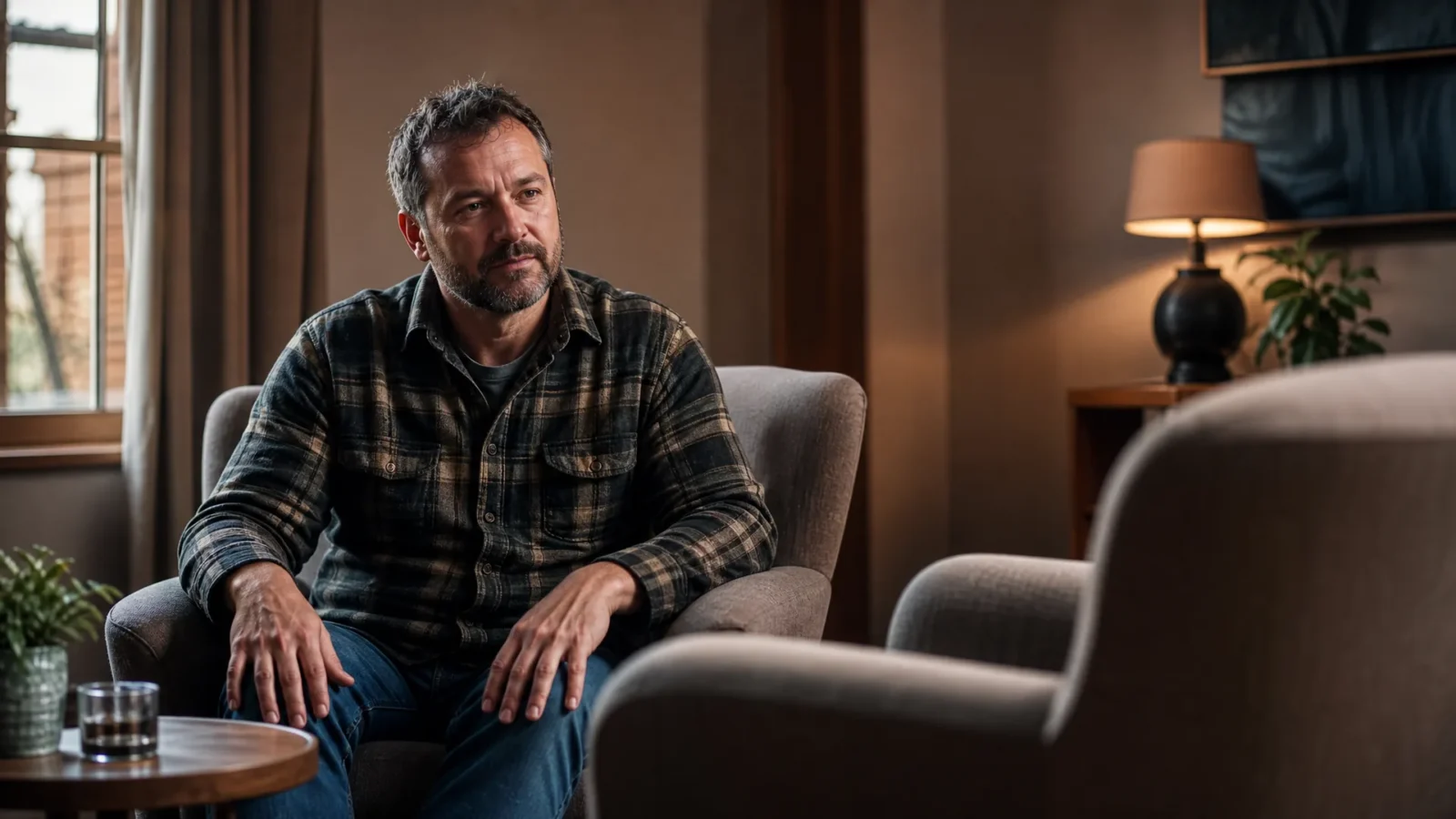
In-Person Counselling Ballarat: Face-to-Face Support for Men
Walking into a counselling room for the first time takes guts. Especially when you’ve spent years handling everything on your own, and the idea of sitting down with a stranger feels completely foreign to who you are. I know that hesitation well because I sat in the same chair before I ever sat behind one, and I understand why so many blokes put it off until the pressure becomes unbearable.
I’m Marcus Ross, and I offer in-person counselling in Ballarat for men navigating separation, divorce, and identity loss. I’ve been through my own relationship breakdown and rebuilt from there, so this isn’t theory for me. This isn’t about fixing you like a broken machine. It’s about giving you a solid space to work through what’s happening without judgement or expectation.
Why Face-to-Face Sessions Matter for Blokes
You might wonder if talking to someone in the same physical room actually changes anything when you’re already exhausted by the effort of holding yourself together through a crisis. For many men I work with, the difference between a screen and a shared space is the difference between performing wellness and actually feeling safe enough to drop the guard they’ve carried for decades.
Reading the Room Without a Screen
Video calls strip away the subtle cues that help us feel understood. You end up staring at a pixelated face, trying to articulate feelings you haven’t had words for since you were a kid. In person, you can read the silence, notice the posture, and sense whether the person opposite you is actually tracking with you or just waiting for their turn to speak. That embodied connection matters when you’re unpacking grief or shame that lives more in your body than in your vocabulary.
Creating Space Away from Daily Triggers
Your home carries the weight of everything you’re trying to process. Logging on from the kitchen table means you’re still surrounded by the very stressors you need distance from to think clearly. Driving to a session creates a psychological boundary, it signals to your nervous system that this hour is different, protected, separate from the chaos of co-parenting handovers or empty rooms. You deserve a place where the environment itself supports the work instead of competing with it.
What In-Person Counselling in Ballarat Actually Looks Like
The unknown is often heavier than the problem itself. That’s why walking you through what showing up actually looks like matters as much as the work we do once you’re here. Knowing what to expect removes the mental load of imagining worst-case scenarios and lets you focus on whether this step feels right for you.
The First Session: No Pressure, Just a Chat
A free 20-minute Connect Call is available so you can work out whether we’re a fit before you commit to any paid in-person or online sessions. I always recommend starting there, because chemistry matters more than credentials. The first paid session keeps that same low-stakes approach: we talk about what’s brought you in, how you’d like things to be different, and whether my way of working suits what you need. There’s no assessment checklist, no diagnostic interrogation, and no requirement to spill your deepest trauma before trust has been earned.
If you’re curious about what counselling actually involves beyond the stereotypes, that initial conversation is where we sort out expectations together.
Confidentiality and Privacy in a Local Setting
Worrying about running into someone you know at the shops, or having your car spotted outside a clinic, is a fair concern in a regional community where social circles overlap constantly. Strict privacy laws govern every word spoken in session. Practical measures, discrete entry points, staggered appointment times, protect your anonymity well beyond the legal minimum. Understanding how confidentiality works should ease the worry that seeking help will turn into local gossip. Your business stays yours.
Is in-person counselling in Ballarat confidential and discreet?
Yes. Protecting that privacy is basic to making this space safe for men who value their reputation as much as their recovery.
Navigating Separation and Identity Loss Locally
Men in regional areas like Ballarat often face compounded isolation during separation, because social and professional networks overlap so much. That’s what makes discreet local support critical once avoidance stops being an option. When your footy club, workplace, and school community all intersect, losing a relationship can feel like losing your entire social infrastructure overnight.
Rebuilding Purpose After Relationship Breakdown
Divorce doesn’t just end a marriage. It shatters the future narrative you’d built around being a husband, a provider, a man with a defined role in your family and community. Reconstructing identity after that collapse takes more than positive thinking. Exploring strategies for coping with separation as a man gives you concrete tools rather than platitudes. This work happens gradually, through honest conversation about who you are when the titles fall away, not through rushed reinvention.
Managing Co-Parenting Stress in a Regional Context
Co-parenting in a small city means navigating school events, sports days, and mutual friends alongside your ex-partner, all while managing your own grief and your kids’ needs at the same time. The emotional labour of holding it together in public while falling apart in private is exhausting. Having somewhere to process that tension stops it poisoning your relationship with your kids. You don’t have to white-knuckle through every interaction alone when there’s support built specifically for fathers in your situation.
This kind of specialised support sits at the centre of men’s counselling in Ballarat, because generic advice rarely accounts for regional dynamics.
Anxiety, Burnout, and Getting Back on Track
Counselling won’t magically erase workplace pressure or restore lost sleep. But it can give you grounding techniques that still work when motivation fails and exhaustion wins. Men dealing with burnout often need practical regulation skills before they’re ready to explore deeper causes, and face-to-face sessions let us practise those techniques together in real time instead of just talking about them. Regaining function isn’t about pushing harder. It’s about learning to recognise your limits before your body forces you to stop.
How does face-to-face counselling differ from online therapy for men struggling with separation or anxiety?
Being in the room allows for the kind of body-level work and settled environment that a screen can’t replicate when your nervous system is already overloaded.
NDIS Counselling Options in Ballarat
NDIS counselling is available for self-managed and plan-managed participants seeking face-to-face support in Ballarat, though eligibility depends on your specific funding category and approved supports. I can provide invoices and documentation aligned with NDIS requirements, but check your coverage with your planner or support coordinator before booking so there are no surprises later. For more on accessing funded support, the NDIS counselling details page sets out what’s possible under current guidelines.
Can I use NDIS funding for face-to-face sessions with Marcus Ross?
Yes, if you’re self-managed or plan-managed and have funding allocated for therapeutic supports.
Choosing Between Online and Face-to-Face Support
Neither option is inherently better. The right choice shifts depending on your circumstances, your energy levels, and what stage of recovery you’re in right now. Being honest about what you can realistically sustain matters more than any theory about which format works best.
When Travel or Scheduling Gets in the Way
Shift work, parenting duties, or a temporary move sometimes make in-person sessions impossible, and online options keep things going when life gets complicated. Skipping therapy entirely because you can’t physically attend defeats the purpose, so flexibility protects your progress during chaotic periods. Showing up matters more than the format you show up in.
Mixing Modalities for Long-Term Progress
Many men I work with alternate between face-to-face and online sessions depending on what each week demands. In-person for deeper processing, video calls for maintenance or a quick check-in. This hybrid approach respects both the value of being in the room together and the reality of busy lives that don’t pause for healing.
How do I know if I should choose in-person or online counselling?
Start with whichever feels most accessible right now. You can always adjust as your needs change.
Taking the First Step Without Commitment
Reaching out doesn’t lock you into anything, and testing the waters costs nothing but twenty minutes of your time.
What is the free Connect Call and how does it work?
It’s a straightforward phone conversation where we talk about what you’re facing, I answer any questions about my approach, and we decide together whether working together makes sense. No sales pitch, no obligation to book, and no awkwardness if you decide I’m not the right fit for what you need. Taking that step is an act of strength, not weakness, and I’ll be here whenever you’re ready to make that call.