
Panic Attack Help for Men: Understanding and Managing Symptoms
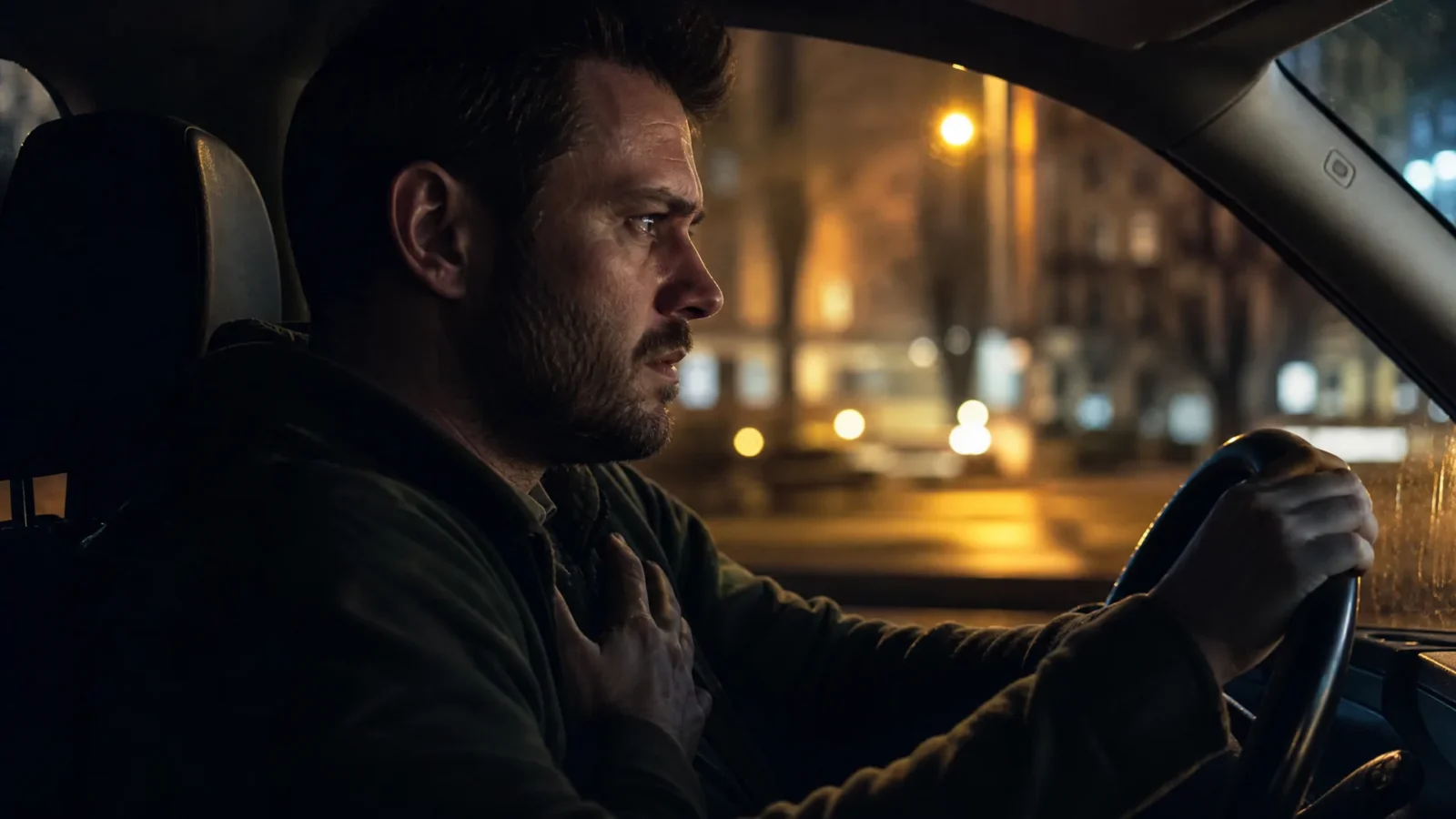
There’s a particular kind of fear that comes with your own body turning on you. Your heart’s slamming, your chest feels like it’s in a vice, and some part of your brain is telling you this is it, something’s seriously wrong. For a lot of men, that’s the first time they ever hear the words “panic attack” applied to themselves, usually from a doctor, after they’ve already convinced themselves they were dying.
I’ve sat with that same chest-tightening, can’t-catch-your-breath feeling myself during my own separation, long before I ever had a name for it or told anyone it was happening. So this isn’t written from a textbook. It’s written from having been there, and from sitting with plenty of other blokes since who’ve been there too.
What a Panic Attack Actually Feels Like (and Why It Blindsides Men)
A panic attack is your body’s alarm system going off at full volume when there’s no actual fire. Your heart races. Your breathing gets short and shallow. Your hands might tingle or go numb, and your chest feels tight enough that you’re sure something’s physically wrong. It can hit in the car, at work, in bed at 3am, for no obvious reason at all.
What makes it worse is the confusion. Most men have never been told what this actually is, so the first instinct is to assume it’s a heart problem, not a mental health one. That confusion is normal. Nobody warned you this was a thing that happens to blokes like you.
Signs of a Panic Attack in Men
The signs of a panic attack in men often show up as physical first, emotional second:
- A racing or pounding heart, sometimes with chest pain or pressure
- Shortness of breath, or a feeling like you physically can’t get enough air
- Sweating, shaking, or a sudden wave of heat or cold
- Tingling or numbness in the hands, arms, or face
- A tight throat or feeling like you’re choking
- A sudden, overwhelming urge to get out, of the room, the car, the situation
- A feeling of unreality, like you’re watching yourself from outside your body
- A gripping certainty that you’re dying, losing control, or about to embarrass yourself
A lot of blokes describe their first panic attack as feeling like a heart attack: chest pressure, pins and needles, a sudden certainty something’s seriously wrong. They end up in an emergency department before anyone mentions anxiety. That’s not weakness or drama. It’s your body doing exactly what a survival system is built to do, just aimed at the wrong target.
Panic Attack vs Anxiety Attack: What’s the Difference
People use “panic attack” and “anxiety attack” like they’re the same thing, but they’re not. Knowing the difference helps you make sense of what’s happening.
A panic attack is sudden. It comes on fast, usually peaks within about ten minutes, and then eases off, even if it feels like it drags on forever while you’re in it. Anxiety is more of a slow burn: a background hum of worry, tension, or dread that can sit with you for hours, days, or longer, without the sharp spike.
Think of anxiety as the weather system, and a panic attack as the sudden, violent storm that breaks through it. You can have anxiety without ever having a full panic attack, and you can have a panic attack completely out of the blue with no ongoing anxiety at all.
Why Panic Attacks Often Hit Hardest During Separation and Big Life Upheaval
Separation, divorce, redundancy, a health scare. These are the moments panic attacks tend to show up, even in men who’ve never had one before in their life.
It makes sense when you think about what separation actually strips away. It’s not just the relationship. It’s the routines, the house, the daily contact with your kids, the identity you’d built around being a husband, a partner, a provider. All of that had been quietly holding your nervous system steady, without you ever noticing it was doing that job.
Panic Attacks After Separation
Separation often strips away the routines and roles: seeing your kids daily, the house, the identity of “husband” or “partner.” Those were quietly holding a man’s nervous system steady, which is why panic can surface even in blokes who’ve never struggled with anxiety before. Add in sleep loss, financial stress, and the awkward silence of not knowing who you’re allowed to talk to about any of it, and it’s little wonder the body starts sounding alarms.
None of this means you’re broken. It means the ground shifted under you faster than your body could adjust, and panic is what that looks like when it surfaces.
How to Stop a Panic Attack: In-the-Moment Steps That Work
When you’re mid-attack, you don’t need a lecture. You need something simple enough to actually do while your brain feels like static. Here’s a sequence that works, talked through like a mate would, not a clinical checklist.
First, say it out loud or in your head: “This is a panic attack. It will pass.” Naming it takes some of its power away, even if you don’t fully believe it yet.
Then get your feet flat on the ground, and just start with the next two steps.
Panic Attack Breathing Exercises
Slowing the exhale longer than the inhale is one of the simplest ways to signal to your nervous system that the danger has passed, even while your body is still convinced otherwise. Try this:
- Breathe in through your nose for a count of four
- Hold for a count of two
- Breathe out slowly through your mouth for a count of six or seven
- Repeat for at least six or seven rounds, even if the first couple feel useless
You’re not trying to stop the panic instantly. You’re just giving your body evidence that the threat has passed, one slow breath at a time.
Grounding Techniques for Panic Attacks
Grounding pulls your attention out of the spiral in your head and back into the room you’re actually standing in. The classic version is the 5-4-3-2-1 method:
- Name five things you can see
- Four things you can physically feel, the chair, your shirt, the floor
- Three things you can hear
- Two things you can smell
- One thing you can taste
It sounds almost too simple to work. But when your mind is convinced you’re dying, giving it a concrete, boring job to do is often exactly what breaks the spiral.
Panic attacks at night hit differently, because you wake up alone, in the dark, with no distractions to pull you out of it. If it happens to you, turn a light on straight away. Darkness feeds the sense of unreality. Sit up, put your feet on the floor, and run through the breathing and grounding steps exactly the same way. Don’t try to just lie there and “power through it.” Get upright, get light, and give your body something concrete to do.
When Self-Help Isn’t Enough: Signs It’s Time to Get Help for Panic Attacks
Breathing and grounding techniques are genuinely useful, but they’ve got a limit. If you’re doing everything right and the attacks keep coming anyway, that’s not you failing at the techniques. It’s a sign the underlying cause needs more attention than in-the-moment tools can give it.
Some signs it’s time to get help for panic attacks:
- The attacks are becoming more frequent, not less
- You’ve started avoiding places, people, or situations in case it happens again
- Sleep is falling apart because you’re dreading the next one
- You’re white-knuckling your way through each day, waiting for the next hit
None of that means you’ve failed. It means you’ve hit the point where self-help alone isn’t the whole answer, and that’s a completely normal point to reach.
What Counselling for Panic Attacks in Australia Actually Involves
Counselling for panic attacks isn’t about lying on a couch talking about your childhood for months on end. It’s about figuring out, with someone who actually gets it, what’s underneath the panic. There’s almost always something underneath it, whether that’s separation, grief, work stress, or years of never having a place to put any of it down.
A counsellor helps unpack what’s actually triggering the attacks, builds a toolkit that’s tailored to your life rather than generic, and gives you somewhere to say the things you’ve never said to anyone. That combination, understanding the root cause plus a real plan, is the bit self-help techniques can’t do on their own.
What to Expect Reaching Out for Support
If you’re weighing up counselling for panic attacks in Australia, sessions can happen online from anywhere in the country, which suits a lot of men who’d rather not sit in a waiting room. NDIS counselling is also available for eligible participants. There’s no assumption you’ll need to unpack your whole life story in the first session. It usually starts with just talking through what’s been happening lately.
Taking the First Step Without Shame
Here’s the thing most blokes don’t realise: almost none of us tell anyone the first time it happens. You white-knuckle it, you tell yourself it was a one-off, and you go back to acting like everything’s fine. I did exactly that for longer than I’d like to admit.
Reaching out isn’t a sign you’ve failed at handling things on your own. It’s just the next reasonable step when the ones you’ve already tried aren’t quite enough on their own.
Marcus Ross Counselling offers a free 20-minute Connect Call. No clinical forms, no pressure, just a plain conversation about what’s going on. If you’re in Ballarat or anywhere else in Australia, that call is a low-pressure way to find out what support might actually look like for you, with no commitment beyond that first conversation.