
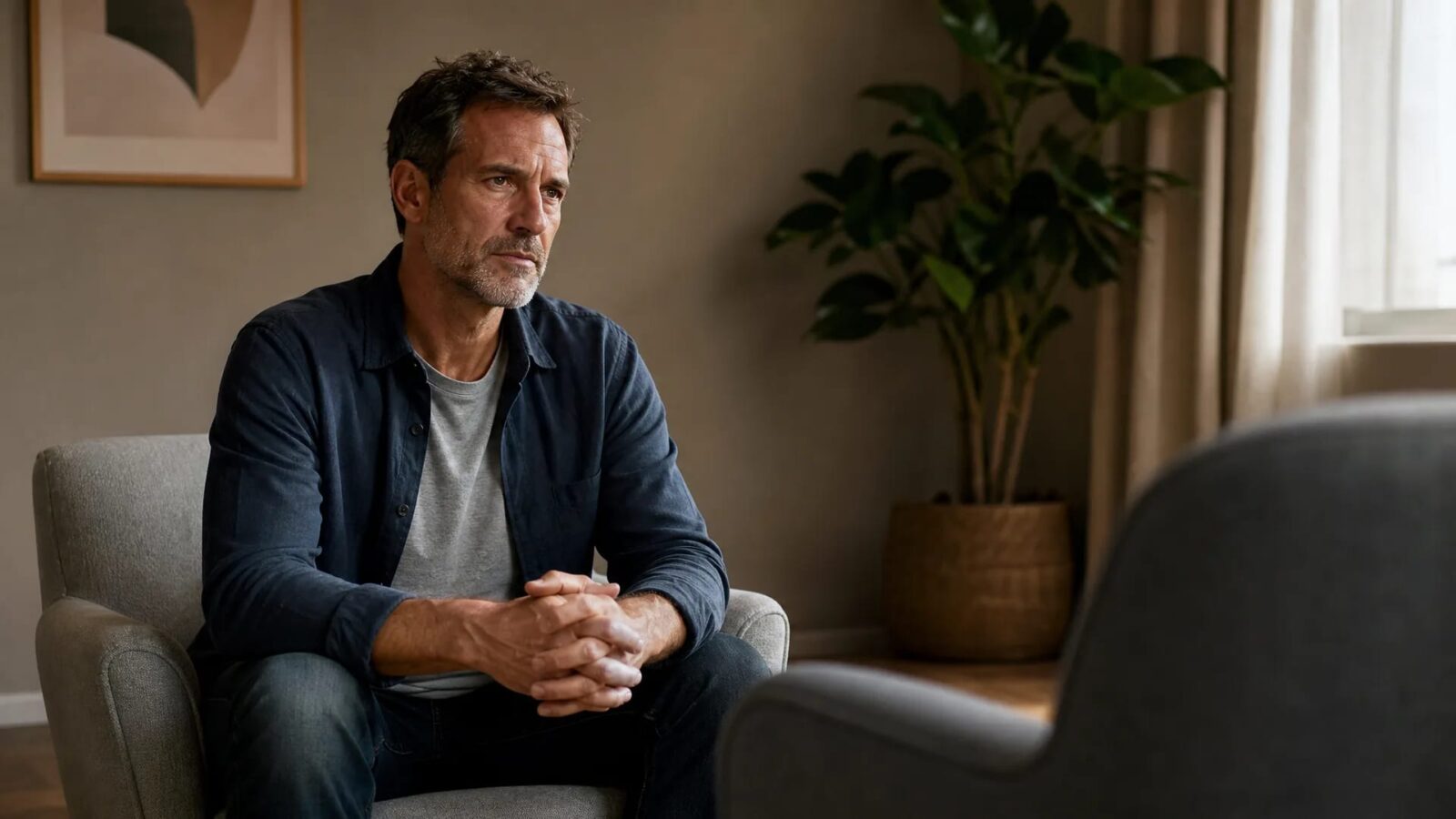
Why Choose In-Person Counselling? Face-to-Face for Blokes
Deciding to talk to someone about what’s going on in your life is a big step. How you have that conversation matters too. For a lot of blokes going through separation, divorce, or just a loss of direction, sitting in a room with a stranger feels a lot harder than hiding behind a screen. But there’s something about face-to-face conversation that a screen can’t give you, especially when you’re trying to untangle complicated emotions or work out who you are now. Why choose in-person counselling? It comes down to looking past convenience and asking what your healing actually needs right now.
What Makes Face-to-Face Therapy Different?
Video calls have made mental health support easier to access than ever, and that’s a good thing. But they filter out the small human signals that often carry the real weight of a conversation. A lot of human communication happens without words at all, and much of that gets lost or warped through a screen, which matters a great deal when you’re working through trauma or grief. When we’re in the same room, I can see the tension in your shoulders, the way you hold your breath, the hesitation before you speak. That lets us work with what’s happening in your body, not just the story you’re telling me.
Reading the Room Beyond Words
Plenty of men find it hard to put emotion into words, especially in the raw aftermath of a relationship ending or a sense of who they are falling apart. In person, silence doesn’t need filling straight away. We can just sit in it, without either of us performing for a camera. Being in the same physical space lets me notice the small shifts in posture or expression that show distress well before you’re ready to name it. That builds a kind of understanding that doesn’t require you to explain everything perfectly.
A Dedicated Space to Switch Off
Your home is probably full of memories, stress, or the very people involved in what you’re struggling with. That makes it hard to drop your guard during a session. Men going through separation often tell me the counselling room gives them a boundary between the work we’re doing and the house where the conflict or loss actually happened, something a video call can’t offer. Walking into a neutral, private room tells your nervous system you’ve stepped out of survival mode. For fifty minutes, you get somewhere built purely for working through things, and permission to leave the weight at the door.
Building Trust Through Shared Physical Presence
Trust isn’t built on qualifications or technique alone. It comes from the accumulated evidence of two people sharing real time and space. Sitting across from someone who’s fully present, in the room with you, without distraction, builds rapport faster than a pixelated image on a screen ever will.
Overcoming the Awkwardness Factor
Feeling stiff or exposed the first time you walk into a therapy room is completely normal, especially if you’ve spent years handling things on your own. That discomfort usually fades once you realise the session isn’t an interrogation or some test of your masculinity. It’s a collaborative effort to make sense of things. Naming the awkwardness together is actually part of the work, it breaks down the artificial wall between client and counsellor and replaces performance with something real.
Why Rapport Matters for Blokes
You need to know the person across from you actually gets it before you’ll risk sharing the parts of your story that feel shameful or weak. I draw on my own experience of relationship breakdown and rebuilding to ground how I work, rather than keeping purely clinical distance, and I’ve found that sharing physical space speeds up that trust for men who find it hard to put feelings into words. When you can sense I’m not judging you or waiting to fix you, the stigma drops enough for the real conversation to start. Difficult stuff about separation or identity starts to feel manageable instead of overwhelming.
When In-Person Sessions Are Worth the Travel
Online therapy works well for maintenance and check-ins. But certain seasons of life need the grounding that only being physically present can give you. If you’re currently working out when it’s time to reach out because everything feels unmanageable, the drive to Ballarat might be an investment in steadying your foundation, not just a logistical hassle.
Navigating Separation and Divorce
The immediate aftermath of a marriage ending often leaves men feeling like the ground has vanished beneath them. Online sessions can help you manage logistics and acute stress. But the deeper work of rebuilding after divorce usually needs something tangible to anchor you, something that helps settle your nervous system when emotions are running high. Being in a physical room gives you that outside stability when everything inside feels chaotic, so you can work through the loss of identity without the isolation of your own four walls closing in.
Processing Grief and Major Transitions
Grief lives in the body as much as the mind, and working through it often takes a kind of body awareness that’s hard to reach through a screen. Anger or deep sadness can spiral when you’re alone in front of a laptop. A calm, regulated presence in the room helps contain those feelings safely. That physical co-regulation is often the missing piece in the breakthrough moments during a crisis. It gives you the safety to move through pain instead of just talking around it.
Privacy and Confidentiality in a Private Practice
Finding a genuinely private space at home to talk about sensitive stuff is one of the biggest barriers men run into with online therapy. Even if you think you’re alone, some part of your brain knows a family member or housemate might overhear, and that keeps you on guard. It stops you reaching the vulnerability real change needs. A dedicated, private consulting room takes that background anxiety off the table entirely. You get guaranteed acoustic and visual privacy, so you can speak freely without checking the hallway or dropping your voice.
Professional standards keep things confidential no matter the format. But the felt sense of security in a room built for exactly this purpose is different from just hoping nobody walks in. You deserve somewhere your words stay contained, and for a lot of men, that physical assurance is what finally lets them be honest about what’s really going on.
Combining Online and In-Person Support
Choosing face-to-face therapy doesn’t mean committing to it forever. Flexibility is often what keeps progress going. Plenty of men find a mix of both works best, so they can keep momentum even when life gets busy or travel isn’t possible.
Flexibility for Regional and Rural Men
If you live outside Ballarat, driving in every week might not fit around work and parenting. We can set up a plan where you come in for in-person support in Ballarat during intensive foundational work or crisis periods, then switch to video calls for maintenance in between. That respects what’s actually practical for you, while still giving you the in-person connection when it counts most.
Transitioning Between Formats
Some men prefer to start online to build comfort and see if it’s a good fit before meeting in person. Others start face-to-face to establish safety first, then move to remote sessions later. There’s no correct order here, only what works for where you’re at. The goal is keeping you engaged, so we adjust the format as things change rather than forcing a structure that eventually makes you drop out.
Taking the First Step Towards Face-to-Face Help
Not knowing what actually happens in a therapy room keeps a lot of men stuck in hesitation long after they know they need support. Knowing roughly what to expect takes the performance pressure off, so you can walk into that first appointment with realistic expectations instead of dread.
When you arrive for your first session, we spend time getting to know each other and talking about what brought you in. There’s no pressure to dive into deep trauma straight away. If you’re new to this, understanding how counselling works beforehand can take the edge off the nerves. But know this: you set the pace, and we only go as far as you’re comfortable with each meeting. I also offer a free 20-minute Connect Call, specifically so you can work out if it’s a good fit without the pressure of committing to a full in-person session before you’re ready. It’s a chance to ask questions and see whether how I work makes sense for you.
Is In-Person Counselling Right for Your Situation?
Face-to-face therapy isn’t automatically better for everyone, and it’s worth being honest about whether it suits where you’re at. It’s probably not the right call if the travel would mean you skip sessions, if childcare isn’t reliable, or if the anxiety of showing up in person would stop you turning up consistently.
Think about your current stressors, where you live, and how comfortable you are with physical proximity when you weigh this up. Ask yourself whether having something tangible and external would help your particular journey through divorce, burnout, or rebuilding confidence, or whether the flexibility of online support would actually serve your consistency better right now. Finding the right counsellor really comes down to matching the format to your needs, not chasing some idealised version of therapy that doesn’t fit your life. If you’re unsure, book a free Connect Call and talk it through with no obligation. We can figure out together whether sitting in the same room is the next right step for you.