
Loss of Purpose After Divorce: Rebuilding Identity for Men
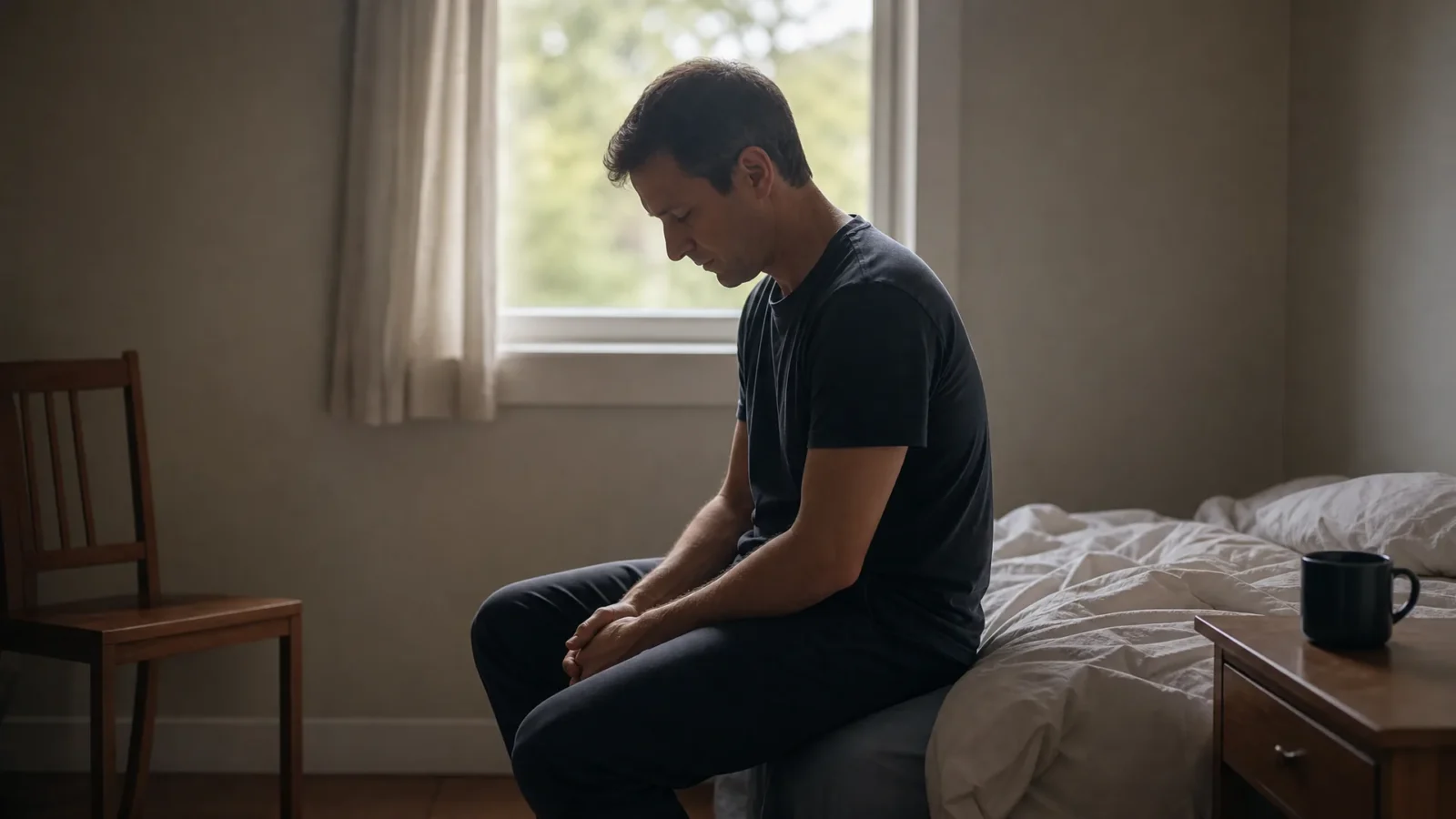
There’s a particular kind of quiet that shows up a few months after the divorce is finalised. It’s not the crisis anymore, the lawyers, the arguments, the logistics of who gets what. That’s died down. What’s left is flatter. You wake up, you go to work, you come home to a house that might be smaller or emptier or just different, and you think: what’s the point of any of this?
If that sounds familiar, you’re not broken. You’re describing loss of purpose after divorce. It’s one of the most common things men go through in the year or two after separation, even though almost nobody talks about it out loud.
Why Loss of Purpose After Divorce Hits Men So Hard
The Difference Between Grief and the Empty Feeling That Follows
Grief has a shape to it. It’s sharp, it comes in waves, and most people expect it: the sadness, the anger, the sleepless nights right after the split. What tends to follow is different. It’s a flatness. A directionless, going-through-the-motions feeling that doesn’t have the same obvious cause, so it’s harder to name and harder to explain to anyone else.
Many men describe the months after the paperwork is finalised as harder than the split itself. The adrenaline of the crisis fades, and an empty, directionless feeling moves in behind it. There’s no fight to have anymore, no decision to make, no fire to put out. Just a long stretch of ordinary days that don’t seem to add up to anything.
That’s not weakness. It’s what happens when the structure that used to hold your life together is gone and nothing has replaced it yet.
If you’re still in the rawer, earlier stage of all this, how to cope with separation as a man covers that phase in more depth. This article is about what comes after, once the dust has settled and the emptiness hasn’t.
Why Men Internalise Directionlessness Instead of Talking About It
Most blokes don’t walk into a mate’s garage and say “I don’t feel like there’s any point to my week anymore.” It doesn’t come up over a beer. Part of that is upbringing, a lot of us were raised to solve problems, not sit in them. Part of it is that this particular feeling doesn’t look like a problem you can fix with action. There’s no obvious task to tackle.
So instead, men tend to carry it quietly. They throw themselves into work, or numb out in front of the TV, or just get quieter around the people who care about them. Men are consistently less likely than women to seek professional mental health support after separation, and often carry the weight of directionlessness alone for months or years before reaching out. Not because they don’t need help. Because asking for it doesn’t come naturally when you’ve spent a lifetime being told to just get on with it.
Who Am I After Divorce? Making Sense of the Identity Gap
When Your Roles Disappear, So Does Your Sense of Self
For a lot of men, identity gets built quietly around roles rather than around who they are underneath them. Husband. Provider. Homeowner. The bloke who mows the lawn on Saturday and does the school run on weekdays he’s rostered on. These roles don’t feel like “identity” while you’re living them. They just feel like life.
Then divorce happens, and a lot of those roles disappear almost overnight. You might not be in the family home anymore. You might not see your kids every day. The routines that used to structure your week are gone, and so is the version of yourself that fit inside them. That’s when the question shows up, uninvited: who am I after divorce, if I’m not any of those things anymore?
It’s a legitimate question, not a sign something’s wrong with you. It’s what happens when the scaffolding comes down and you haven’t had time to work out what’s actually load-bearing versus what was just habit.
Feeling Lost After Divorce Is a Normal Response, Not a Personal Failing
If you’re feeling lost after divorce, you’re not experiencing something rare or shameful. It’s a predictable response to a genuine upheaval in how you understand yourself. Divorce and loss of self tend to go hand in hand, because so much of adult male identity gets tangled up with roles rather than with an independently examined sense of who we are.
That doesn’t mean you’re stuck this way. It means the work isn’t really about “getting back to normal.” It’s about figuring out who you’re becoming now that the old normal is gone. If you want to go deeper on this specific piece, rebuilding who you are after separation looks at that identity question in more detail.
Rebuilding Identity and Finding Motivation After Divorce
Small, Concrete Steps Instead of a Five-Step Framework
There’s no five-step program that fixes this, and I’d be lying if I told you there was. Finding motivation after divorce usually doesn’t come from a big insight or a dramatic reinvention. It comes from small, repeatable things that start to give your week some shape again.
Things like:
- Getting a basic routine back, even just consistent wake times and meals
- Picking one small thing to look forward to each week, however minor
- Reconnecting with an interest or hobby you dropped years ago, even if you’re rusty at it
- Seeing a mate for no reason other than to see a mate
- Moving your body regularly, not for a physique goal but because it steadies your head
None of these fix the bigger question of purpose on their own. But they build the ground you need to stand on before you can even start answering it. Motivation tends to follow small action, not the other way around. Waiting to “feel ready” before you do anything usually means waiting a long time.
Fatherhood as an Anchor When Everything Else Feels Uncertain
If you’re a dad, fatherhood often becomes the one steady anchor point while everything else, home, routine, identity, has been upended. Even when custody arrangements have changed and you’re not seeing your kids every single day, being their father doesn’t stop. It’s one part of your identity that survives the divorce fully intact.
Leaning into that, showing up fully for the time you do have, staying involved in school and sport and the small daily stuff where you can, gives a lot of men something solid to hold onto while the rest gets sorted out. It’s not a fix for the whole problem. But it’s real, it’s yours, and it doesn’t depend on anyone else’s decisions.
When Life Feels Meaningless After Separation: Knowing When to Reach Out
Signs the Flatness Has Gone On Too Long
Some flatness after divorce is expected and it usually eases with time, routine, and small deliberate steps forward. But sometimes it doesn’t ease. It settles in and stays. Worth paying attention to if:
- It’s been well over a year and the sense of purpose hasn’t started to return at all
- You’ve stopped caring about things you used to genuinely enjoy
- Sleep, appetite, or energy have been consistently off for weeks
- You’re relying more and more on alcohol or work to get through the day
- The thought “what’s the point” has started showing up more often, and with more weight behind it
If any of that sounds like where you’re at, it’s worth looking at signs it’s time to talk to someone, and worth taking seriously rather than pushing down for another six months.
It’s also worth naming clearly: if life feels meaningless after separation in a way that includes thoughts of not wanting to be here, that’s not something to sit with alone. Reach out to your GP, or in Australia contact Lifeline on 13 11 14 any time, day or night.
What Counselling for Men Feeling Lost Actually Involves
A lot of blokes picture counselling as lying on a couch talking about your childhood while someone nods silently. In practice, it’s far more ordinary than that. It’s a conversation. You and someone who’s trained to listen well, talking through what’s actually going on for you, without judgement and without a script.
Counselling for men feeling lost usually starts with simply naming what’s happening: the flatness, the identity questions, the loss of direction. From there it’s about working out, practically and gradually, what rebuilding looks like for you specifically, not a generic template lifted from a book. If divorce is the specific thing you’re navigating, divorce counselling for men across Australia is built around exactly that. And if the heavier grief is still sitting underneath the flatness, grief counselling for men addresses that layer directly.
Starting Over After Divorce: Marcus’s Own Experience and How Online Counselling Helps
Why Marcus Understands This From the Inside
I’m Marcus, and I’m not writing any of this from a textbook. I’ve been through relationship breakdown myself, and I remember exactly what it’s like when the crisis part ends and the flat, hollow part begins. I remember not knowing who I was meant to be once the roles I’d built my life around were gone. I remember the slow, unglamorous work of finding direction again, one small decision at a time.
That’s why this practice doesn’t do clinical distance. I talk to blokes plainly, bloke to bloke, because that’s what actually helped me. Someone who got it, not someone reading off a checklist.
A Low-Barrier First Step: Online Counselling Australia-Wide
Starting over after divorce as a man in Australia doesn’t have to start with a big commitment. Online sessions Australia-wide mean a bloke in a country town or a city apartment can start talking to someone the same week he decides he’s ready, without waiting weeks for a local appointment. If you’re in Ballarat, Victoria, in-person sessions are also on the table.
The easiest first step is a free 20-minute Connect Call. No pressure, no commitment, just a conversation to see if it’s a fit. If you’re ready to talk to someone about men’s counselling with Marcus Ross, that call is the place to start. You don’t need to have it all figured out first. You just need to be willing to make one small move.