
Social Anxiety Counselling for Men
If you’ve ever made up an excuse to skip the work Christmas party, or found yourself doing laps of the car park before you can walk into a barbecue, you’re not alone. You’re not broken either. A lot of blokes carry some version of social anxiety around for years without ever calling it that. They just call it “not being a people person” and get on with it.
This is about what social anxiety counselling actually looks like for men, not the clinical version, the real one. What the signs actually look like day to day, why so many men avoid naming it, and what happens if you decide to do something about it.
Signs of Social Anxiety in Men (That Don’t Look Like a Checklist)
Most lists of social anxiety symptoms in adults read like a medical form: racing heart, sweating, fear of judgement. All true. But it’s not how it shows up in real life for most blokes I talk to.
In practice, it looks more like:
- Saying yes to the work drinks, then finding a reason to bail an hour before
- Going quiet at family events and letting your partner or mum do the talking
- Timing your arrival at parties so you miss the awkward “mingling” bit
- Over-preparing an exit line before you’ve even walked in the door
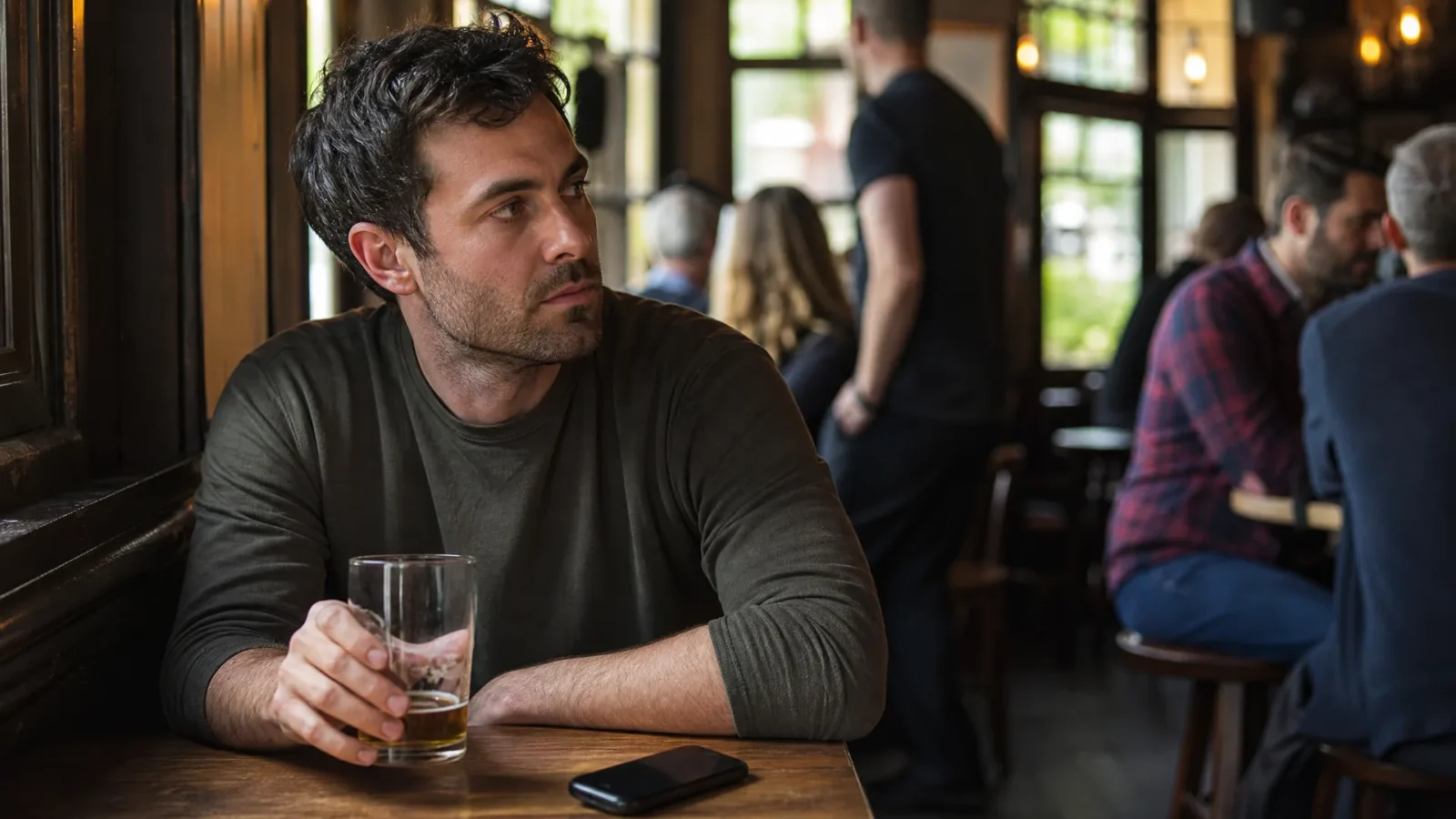
- Choosing the pub table in the corner, near the door, every single time
- Feeling wrecked for the rest of the day after “small talk” at the shops
None of that screams anxiety disorder. It just looks like a bloke who’s a bit reserved, a bit tired, a bit busy. That’s exactly why it gets missed, by mates, by family, and often by the bloke himself.
Why It Often Gets Called ‘Just Being Quiet’ Instead
Blokes are usually pretty good at explaining away their own avoidance. “I’m just not a big drinker anymore.” “I’ve got work early.” “I’m not really into that crowd.” These explanations aren’t lies. They often feel true in the moment. But underneath a lot of them sits the same thing: a dread of being watched, judged, or caught out socially, and a habit of steering around it rather than through it.
I’ve sat across from blokes who’d rather cancel a mate’s birthday than walk into a room where they might have to make small talk. I’ve felt that same pull myself. It’s more common than most men think, and it rarely looks like what the textbooks describe.
Why Men Mask It Instead of Naming It as Anxiety
Social anxiety is one of the most common forms of anxiety in Australia, yet it’s consistently under-reported in men because it gets relabelled as “just being introverted” or “not really a people person.” Calling it anxiety feels like admitting something’s wrong with you. Calling it “just not my scene” feels like a personal preference, a choice, not a struggle.
That distinction matters, because most men are raised on some version of the idea that you handle your own stuff. Admitting you get anxious walking into a room full of people can feel like admitting you can’t cope. So instead, blokes reframe it. They tell themselves they’re busy, disinterested, or just introverted by nature. It protects the ego, even as it quietly shrinks the world they’re willing to move around in.
The ‘Just Get On With It’ Trap
The “get on with it” mindset works fine for plenty of problems. It doesn’t work so well here, because avoidance feeds the anxiety instead of fixing it. Every event you dodge makes the next one feel a little bigger. Every excuse that works makes the real reason easier to hide, even from yourself.
The trap isn’t that men lack willpower. It’s that “getting on with it” usually means avoiding the trigger, not addressing what’s underneath it. Over time, that avoidance can quietly become the whole shape of a man’s social life: smaller, safer, and lonelier than it used to be.
When Social Anxiety Shows Up After Separation or Big Life Change
Social anxiety doesn’t always start in childhood or adolescence. For a lot of men, it resurfaces, or shows up for the first time, after a major life change. Separation is one of the biggest triggers I see.
A common pattern: a bloke who was fine going to the pub with mates for years, but after separation, the same pub trip suddenly feels like a test he might fail. Same mates, same pub, same footy on the telly. But now there’s a running commentary in his head about what people think, whether they know, whether he’s coming across as fine or falling apart.
Losing the Mates and Routines That Used to Carry You
Some men come to me after a job loss or separation, not because they’ve suddenly become anxious, but because the routines and mates that used to buffer them are gone. A lot of men’s social lives run on autopilot: the same footy group, the same Friday knock-off drinks, the same family gatherings organised by a partner. When that structure disappears, the social anxiety that was always sitting quietly underneath suddenly has nothing to hide behind.
This is often tangled up with the bigger job of rebuilding your identity after separation, not just who you socialise with, but who you are without the routines that used to carry you. If any of this sounds familiar, it might help to look at coping with separation as a man more broadly, because the isolation and the anxiety usually aren’t two separate problems. They feed each other.
What Happens in Social Anxiety Counselling, Session by Session
A lot of men hesitate to book counselling because they picture something clinical: lying on a couch, being diagnosed, talking about their childhood in detail whether it’s relevant or not. That’s not how it works with me, and it’s not how most practical, present-focused counselling works.
The First Session: No Diagnosis Pressure
The first step is usually a free 20-minute Connect Call, a low-key chat, not an assessment. No forms, no diagnosis, no pressure to have the “right” answers. It’s just a chance to say what’s going on, in your own words, and see if working together makes sense.
If you go ahead into full sessions, the early ones are mostly about listening. What situations do you avoid? What’s the internal commentary that kicks in beforehand? What’s it costing you: mates you’ve drifted from, events you’ve skipped, opportunities at work you’ve dodged? Sessions with me aren’t about diagnosing you. They’re about working out what situations you’re avoiding, why, and building back from there at your pace.
How Sessions Build Toward Real-Life Situations
Once we’ve got a clear picture, sessions shift toward practical ground. That might mean unpacking what actually happens in your body and head before a social event, so it stops feeling so random and out of control. It might mean testing small, real-world steps between sessions: a short phone call instead of avoidance, five minutes at a work event instead of the whole night.
It’s not about pushing you into the deep end. It’s steady, paced work, building tolerance for social situations the same way you’d build fitness, a bit at a time, with someone checking in on how it’s actually going.
Practical Ways to Start Rebuilding Social Confidence
Overcoming social anxiety as a man doesn’t require a personality transplant or a total life overhaul. It usually starts smaller than people expect, and it doesn’t demand you feel “ready” first.
Small, No-Pressure Steps Before You’re ‘Ready’
Some places to start, without waiting to feel confident first:
- Text before you call, reply in your own time, then build up to a quick phone chat
- Pick one low-stakes catch-up (a coffee, not a whole night out) rather than diving into a big event
- Give yourself permission to leave early, so you’re not avoiding things out of fear you’re “stuck” there
- Notice the avoidance pattern out loud, even just to yourself: “I’m dodging this because it makes me anxious,” not “I’m just too busy”
- Talk to someone about it before it becomes a bigger pattern of shyness and avoidance
None of these fix things overnight. But they interrupt the cycle where avoidance quietly becomes the default. If social anxiety is sitting alongside broader anxiety, worry, or unease that follows you around, a practical guide to coping with anxiety might round out what you’re working on. And if social situations sometimes tip into something sharper, chest tightness, a racing heart, feeling like you need to escape, it’s worth understanding more about managing panic attack symptoms too, since the two often overlap.
Online Social Anxiety Counselling Australia-Wide (and In Ballarat)
If the idea of sitting in a waiting room, then walking into an office to talk about social anxiety, sounds like its own kind of exposure therapy, you’re not wrong. That’s exactly why online counselling for social anxiety works well for a lot of men.
Why Online Counselling Suits a Socially Anxious Bloke
Online sessions mean no waiting room, no small talk with reception, no chance of running into someone you know. You can do it from your own space, at a time that suits you, without the added social load of getting there. For a bloke already wary of social situations, that lower barrier to entry often makes the difference between booking and not booking at all.
I offer social anxiety counselling online, Australia-wide, as well as in-person anxiety counselling in Ballarat. Wherever you’re based, the approach is the same: practical, paced, and built around your actual life, not a script. If you’re local, you can find out more about men’s counselling in Ballarat and how sessions run in person. If privacy is part of what’s holding you back, it’s worth reading up on how confidential counselling works before you decide.
There’s no checklist you need to tick off, no proof you need to bring, and no requirement that things have gotten “bad enough” first. If you’re dodging events, going quiet at gatherings, or noticing your world has gotten smaller since a separation or big change, that’s reason enough to talk to someone.
A free 20-minute Connect Call is a good place to start. No commitment, no pressure, just a conversation about what’s going on and whether counselling might help. If you recognise yourself in any of this, that’s usually a sign it’s worth having.